
On Tuesday, China condemned the United States for what it described as “reckless and perilous” actions regarding the US-imposed blockade on Iranian ports. President Xi Jinping pledged that Beijing would actively contribute to fostering peace in the Middle East amid escalating tensions.
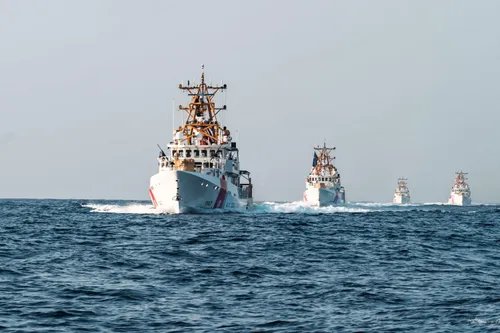
Following the collapse of diplomatic negotiations between Washington and Tehran over the weekend, US President Donald Trump issued a stern warning to destroy any vessels attempting to enter or exit Iranian harbors and adjacent Gulf waters.
The blockade officially commenced at 1400 GMT on Monday, despite a tentative two-week ceasefire agreement reached just days prior between the US and Iran.
Chinese Foreign Ministry spokesperson Guo Jiakun criticized the US military buildup and targeted blockade, stating, “Such measures will only heighten tensions, undermine the fragile ceasefire, and threaten the security of navigation through the Strait of Hormuz.”
He further emphasized, “This conduct is both dangerous and irresponsible.”
In response, Iran has effectively restricted access to the strategically crucial Strait of Hormuz, permitting passage solely to vessels from nations it considers allies, including China.
US Intensifies Pressure on Iran
Experts interpret Trump’s blockade as a strategic effort to cut off Iran’s financial resources and coerce China-the largest importer of Iranian oil-to compel Tehran to reopen the vital Strait of Hormuz. This narrow waterway is a critical artery, channeling approximately 20% of the world’s oil supply during normal conditions.
Iran’s ambassador to the United Nations denounced the blockade as a “serious infringement” on the country’s sovereignty.
China’s Call for Respecting Sovereignty and Peace
For the first time publicly addressing the conflict, President Xi underscored the importance of respecting the sovereignty of Middle Eastern and Gulf nations. His remarks came during a meeting with Abu Dhabi’s Prince Sheikh Khaled bin Mohamed bin Zayed Al Nahyan in Beijing, where Xi reaffirmed China’s commitment to playing a constructive role in facilitating peace negotiations.
Simultaneously, China firmly rejected US threats to impose additional tariffs on Chinese imports, which followed allegations that Beijing was supplying or planning to supply arms to Iran.
President Trump, preparing for his upcoming visit to Beijing next month, warned on Sunday that he would levy a 50% tariff on Chinese goods if China provided military support to Tehran.
Chinese Foreign Ministry spokesman Guo Jiakun dismissed these claims as “entirely baseless,” warning that any US attempt to use such accusations as a pretext for new tariffs would provoke strong retaliatory measures from China.
Diplomatic Engagements Amid Rising Tensions
Beijing is hosting a series of high-profile visits from leaders of countries affected by the Middle East conflict this week, signaling China’s growing diplomatic involvement.
Vietnam’s Minister of Public Security To Lam and Russian Foreign Minister Sergei Lavrov arrived in the Chinese capital on Tuesday, aiming to enhance collaboration on both the regional crisis and broader bilateral relations.
The Russian Foreign Ministry confirmed that Lavrov and China’s top diplomat Wang Yi would discuss the Middle East situation during their meeting, following a recent phone call in which they agreed to jointly pursue de-escalation efforts.
Additionally, Spanish Prime Minister Pedro Sanchez is in Beijing this week, primarily focusing on strengthening trade ties between Spain and China.
During his visit, Sanchez highlighted China’s potential to play a pivotal role in stabilizing the Middle East. President Xi cautioned against reverting to a “survival of the fittest” mentality in international affairs, according to Chinese state media.
“China and Spain are both principled nations committed to justice. They should enhance dialogue, build mutual trust, and work closely to resist any regression to the law of the jungle,” Xi stated during their meeting at Beijing’s Great Hall of the People.
AFP