
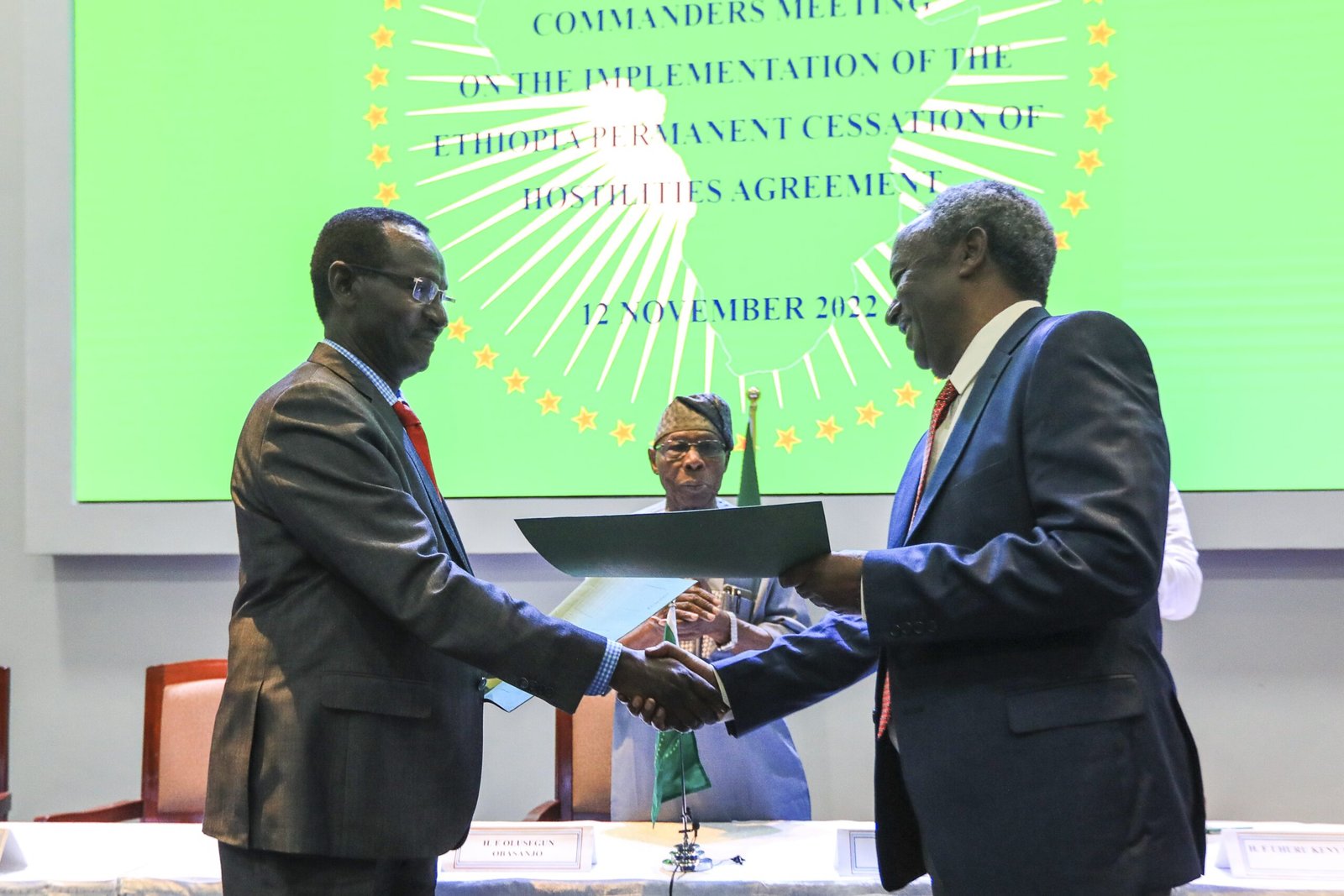
TPLF Accuses Ethiopian Government of Breaching Pretoria Peace Accord
In a recent Facebook announcement, the Tigray People’s Liberation Front (TPLF) accused Ethiopia’s federal government of violating the Pretoria Agreement, the peace deal that ended the devastating two-year conflict in Tigray. The TPLF alleges that the government has instigated renewed hostilities within the region, withheld financial resources necessary to pay regional civil servants, and unilaterally extended the interim administration president’s term without consulting the party.
Renewed Tensions Signal Potential Return to Conflict
The TPLF’s statement warned that the federal government appears eager to reignite violent confrontations, describing the situation as “a rush toward another bloody war.” This development has raised alarm among observers who fear a relapse into large-scale violence in a region still recovering from immense suffering.
Political Fallout and Calls for International Intervention
Getachew Reda, former TPLF spokesperson and current adviser to Prime Minister Abiy Ahmed, responded on X (formerly Twitter), interpreting the TPLF’s declaration as a direct rejection of the post-conflict governance framework established by the Pretoria Agreement. He urged the global community to intervene promptly to prevent a catastrophic escalation in a region already burdened by conflict and humanitarian crises.
Official Responses and Silence
Requests for comment from Prime Minister Abiy’s office, specifically spokesperson Billene Seyoum, went unanswered regarding the TPLF’s accusations. Similarly, TPLF representatives were not immediately available to provide further clarification.
Background: The Tigray Conflict and the Pretoria Agreement
The civil war between TPLF-led forces and Ethiopia’s federal army from 2020 to 2022 resulted in hundreds of thousands of deaths, driven not only by direct combat but also by the collapse of healthcare systems and widespread famine, according to independent research. The conflict originated from deteriorating relations between the TPLF-a former dominant political force in Ethiopia-and Prime Minister Abiy Ahmed, whose 2018 rise to power marked the end of TPLF’s political hegemony.
The Pretoria Agreement, brokered by the African Union in late 2022, aimed to halt hostilities by establishing an interim administration in Tigray. This transitional government was to be formed through negotiations between the federal government and the TPLF, replacing the region’s elected bodies until new elections could be held.
Fragile Peace and Recent Clashes
While the peace deal initially brought hope, its implementation has faced significant challenges. Since January, sporadic armed clashes have erupted between TPLF forces and federal troops, as well as militias aligned with the government, signaling a fragile and deteriorating security environment.
TPLF’s Strategic Shift: Reinstating Regional Governance and Building Alliances
In reaction to what it describes as federal government breaches of the peace accord, the TPLF announced plans to reinstate the pre-interim regional executive and legislative bodies. Additionally, the party intends to deepen cooperation with neighboring Ethiopian regions and adjacent countries, aiming to consolidate regional support amid escalating tensions.
Federal Government’s Position and Eritrea’s Role
The Ethiopian federal government has reiterated its commitment to the Pretoria Agreement while accusing the TPLF of conspiring with Eritrea, Ethiopia’s neighbor and former adversary. Eritrea, which gained independence in 1993 and fought a border war with Ethiopia from 1998 to 2000, supported Ethiopian federal forces during the Tigray conflict. However, Eritrea has recently expressed unease over Ethiopian Prime Minister Abiy’s statements regarding Ethiopia’s aspiration for access to the sea, a sensitive geopolitical issue given Ethiopia’s landlocked status.
Both the TPLF and Eritrean officials have denied any collaboration. Meanwhile, the African Union has yet to comment on the TPLF’s decision to restore the previous regional administration.
Looking Ahead: Risks and Regional Stability
The resurgence of political and military tensions in Tigray threatens to unravel the fragile peace established by the Pretoria Agreement. With millions still vulnerable due to the war’s humanitarian aftermath, renewed conflict could exacerbate instability not only within Ethiopia but across the Horn of Africa. International actors and regional stakeholders face mounting pressure to facilitate dialogue and prevent a return to widespread violence.
Reporting by Aaron Ross; Edited by Sharon Singleton and Daniel Wallis