
Electrifying Minibus Taxis: Transforming Urban Mobility in Southern Africa
The Vital Role of Minibus Taxis in Southern African Cities
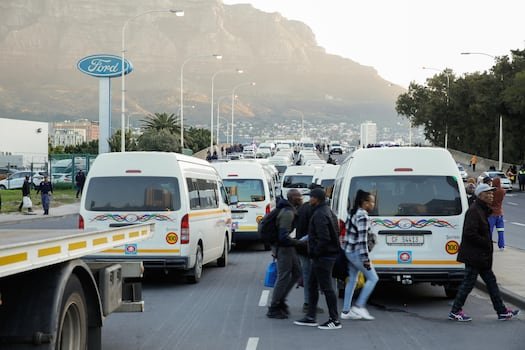
Minibus taxis are an integral part of daily life across southern Africa, serving as a critical pillar of urban transportation. In Cape Town, South Africa’s second-largest city, these vehicles form the backbone of the public transit system, offering affordable and flexible travel options to millions of commuters. Approximately two-thirds of Cape Town’s public transport users depend on these paratransit services, which operate on nearly 1,500 routes managed by private operators rather than government entities, collectively transporting around 830,000 passengers every day.
Environmental Impact and the Urgency of Transition
Despite their importance, minibus taxis predominantly run on petrol and diesel, contributing significantly to greenhouse gas emissions, deteriorating urban air quality, and escalating fuel expenses. South Africa’s electricity generation remains heavily reliant on coal, which accounts for about 83% of the national grid’s power supply. This reliance complicates the environmental benefits of switching to electric vehicles (EVs), as charging EVs on a coal-dependent grid can paradoxically result in higher carbon emissions compared to diesel-powered vehicles.
However, electric minibuses offer substantial local environmental advantages, including the elimination of tailpipe particulate matter, reduced brake wear, and lower noise pollution-factors that greatly improve urban living conditions. As South Africa progressively integrates more renewable energy sources into its grid, the climate benefits of electric minibus taxis will become increasingly pronounced, positioning electrification as a long-term solution for cleaner, healthier cities.
Energy Demand and Infrastructure Challenges
Transitioning Cape Town’s minibus taxi fleet to electric power would introduce a significant new load on the city’s electricity system. A single electric minibus typically consumes about 50.8 kWh daily, which, when multiplied across an estimated 9,000 vehicles, translates to roughly 460 MWh per day-equivalent to the energy needs of nearly 66,000 households. The critical challenge lies not only in the volume of energy required but also in the timing and location of vehicle charging.
Contrary to the assumption that faster chargers at taxi ranks are the sole solution, research indicates that access to secure and convenient charging-especially at drivers’ homes or within their communities-plays a more pivotal role in maintaining service reliability and adapting to driver behavior. Charging infrastructure must extend beyond formal taxi ranks to include informal stops and neighborhood locations, reflecting the flexible nature of paratransit operations.
Moreover, the legacy of apartheid-era spatial inequalities means that operators in historically underserved areas face greater difficulties accessing home charging, highlighting the need for equitable infrastructure deployment. Unmanaged charging patterns could exacerbate peak electricity demand, stressing the grid further. Implementing time-of-use tariffs, managed charging systems, and integrating renewable energy sources like solar power can help mitigate these challenges and optimize grid performance.
Economic Considerations for Taxi Operators
For minibus taxi operators, the financial implications of adopting electric vehicles are complex. The upfront cost of an electric minibus can be approximately 1.5 times higher than that of a conventional diesel model such as the Toyota Ses’fikile, a popular 16-seater in the market. Many operators operate on narrow profit margins and face high-interest financing rates-often around 20% over six years-with limited access to affordable credit due to perceived lending risks.
Despite these barriers, electric minibuses offer significantly lower operating costs, with energy expenses 33% to 57% less than diesel fuel and reduced maintenance requirements due to simpler electric motor mechanics. The overall economic viability depends heavily on factors such as electricity pricing, financing conditions, and the availability of cost-effective charging options.
Strategic Planning for a Successful Electrification Transition
Implementing electric minibus taxis at scale demands meticulous planning that accounts for the interplay between vehicle energy needs, charging infrastructure, grid capacity, driver behavior, and passenger service quality. Unlike formal bus systems, minibus taxi drivers dynamically adjust routes and stops based on passenger demand and competition, necessitating flexible and adaptive electrification strategies.
Simulation studies reveal that reliance solely on depot charging can lead to increased waiting times and reduced trip frequency, whereas incorporating home charging significantly alleviates depot congestion and helps maintain service standards. Recognizing the informal and decentralized nature of paratransit is essential; treating these operations like rigid bus fleets risks ineffective policy and infrastructure decisions.
Collaborative Approaches for Equitable and Sustainable Outcomes
To ensure a just and effective transition, collaboration among taxi operators, municipal authorities, energy providers, and local communities is vital. Policymakers must balance the benefits of cleaner air and quieter streets against the current emissions profile of the electricity grid. Improving operator economics through favorable tariffs, accessible financing, and targeted subsidies will be key to adoption.
Charging infrastructure should be strategically distributed-not only at depots and formal ranks but also within neighborhoods and informal stops that define daily paratransit operations. Investments in renewable energy and supportive policies will further enhance the sustainability and resilience of the transport system.
Looking Ahead: Cape Town as a Model for African Cities
With plans to introduce fully electric minibus taxi routes in Century City by 2026, Cape Town stands at the forefront of a transformative shift in urban mobility. By addressing technical, economic, and social challenges through integrated planning and inclusive stakeholder engagement, the city can pioneer a cleaner, more equitable public transport future. This approach could serve as a valuable blueprint for other African cities where paratransit remains the dominant mode of daily travel.
• MJ (Thinus) Booysen is a professor in engineering at Stellenbosch University; Joshua Sello is a postgraduate student in electronic engineering at Stellenbosch University